
Houston City Directory Collections
Houston's historical directory shelf has online, library, and archive routes. The HPL digitized directory collection makes the public-domain run available from 1866 through 1923, though individual volumes and page OCR vary. Clayton Library Campus holds physical volumes from the nineteenth century through 1986, and HeritageQuest supplies part of the 1925-1959 range under library access conditions. Use the exact title page when citing a volume, because shelf title and publisher can change from run to run.
| Houston collection | Years represented | Keeper | Research route |
|---|---|---|---|
| Digitized directory run | 1866-1923 public-domain series | HPL Digital Archive / ContentDM | Browse or search online; inspect page image where OCR is thin. |
| Physical directory run | Nineteenth century-1986 | Clayton Library Campus | Use in person or request documented, limited reference help. |
| HeritageQuest directories | Part of 1925-1959 | Houston Public Library database | Library access conditions apply. |
| Criss-cross directories | 1925-current, with title and year gaps to verify | HPL and local collections | Use the address-first sections for later address research. |
The Texas State Library and Archives Commission also lists Houston volumes from 1866 and many later years, including annual or near-annual stretches after 1925. The list has gaps, including 1942, 1950, several later years, and varying titles. A missing year is a reason to check another holder, not proof that no directory was printed or that a household vanished.
For the nineteenth century, the TSLAC list includes 1879-80, 1882-83, 1884-85, 1886-87, 1887-88, 1889-90, 1890-91, 1894-95, 1895-96, 1897-98, 1899, 1900-01, 1903-04, 1905-06, and 1908-09. It then identifies selected years through the 1910s and 1920s. That detail makes a year-by-year search practical: first ask whether a listed volume exists, then decide whether the digital collection, a library shelf, or a state-library copy is the best access channel.
Houston Directory Begins in 1866
The first known Houston city directory volume is dated 1866. Its ContentDM record identifies L. Polk of Dallas as publisher, W.A. Leonard as compiler, and Gray, Strickland as the original Houston publisher. That early volume has xvi, 124, and xvii-lxvii pages in its stated extent. Those details matter when a family history note needs to distinguish the volume year from its compiler or publication imprint.
- 1866: Houston’s first known directory volume establishes the starting point for the local run.
- 1866-1923: The Houston Public Library digital collection provides the public-domain series online.
- 1925-1959: HeritageQuest supplies part of the later directory run through Houston Public Library access.
- Through 1986: Clayton Library’s physical holdings extend the shelf beyond the digital volumes.
The digitized 1866 directory page is a useful example of the collection's page-image access. It can show a page even when machine text does not capture every line.
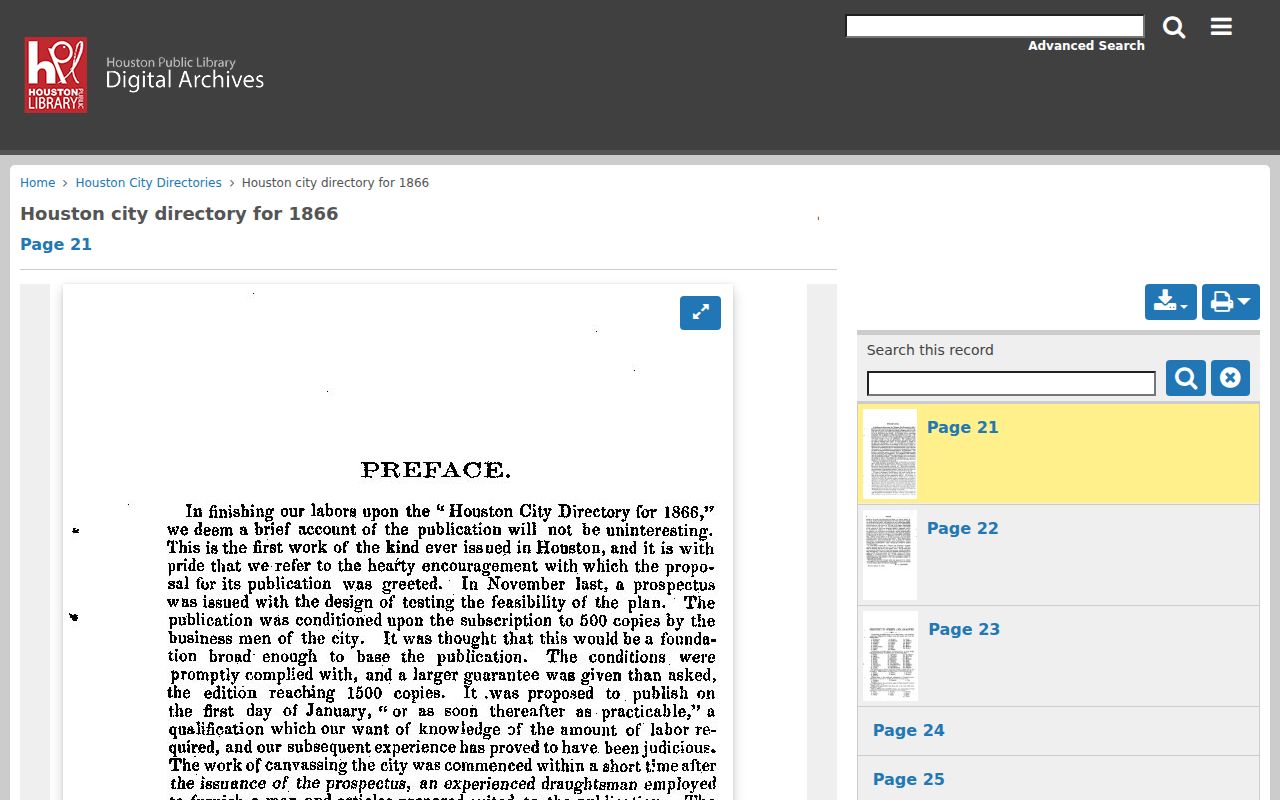
For a Houston city directory citation, keep the volume year, page number, collection name, and a transcription checked against the page image. Do not assign a person's name from imperfect OCR alone.
Note: The 1866 book is a historical source, so its labels reflect the volume and need careful reading in modern research.
Houston Directory Research Shelves
Clayton Library Campus, at 5300 Caroline Street, brings city directories together with microprint, periodicals, newspapers, family vertical files, and staff assistance. The Houston History Research Center, at 550 McKinney Street, adds maps, photographs, oral histories, and local archival material. A directory hit gains context when a newspaper notice, yearbook, map, or funeral record points to the same name or address.
Clayton began as an HPL special collection in 1921, moved to Clayton House in 1968, and expanded after the adjacent site was acquired in 1986 and a new building opened in 1988. Its more than 3,000 periodical titles and family vertical file make it useful when an address search needs local context that did not enter a government index. Bring the year and spelling already established from a volume, then ask for the narrowest matching shelf or database path.
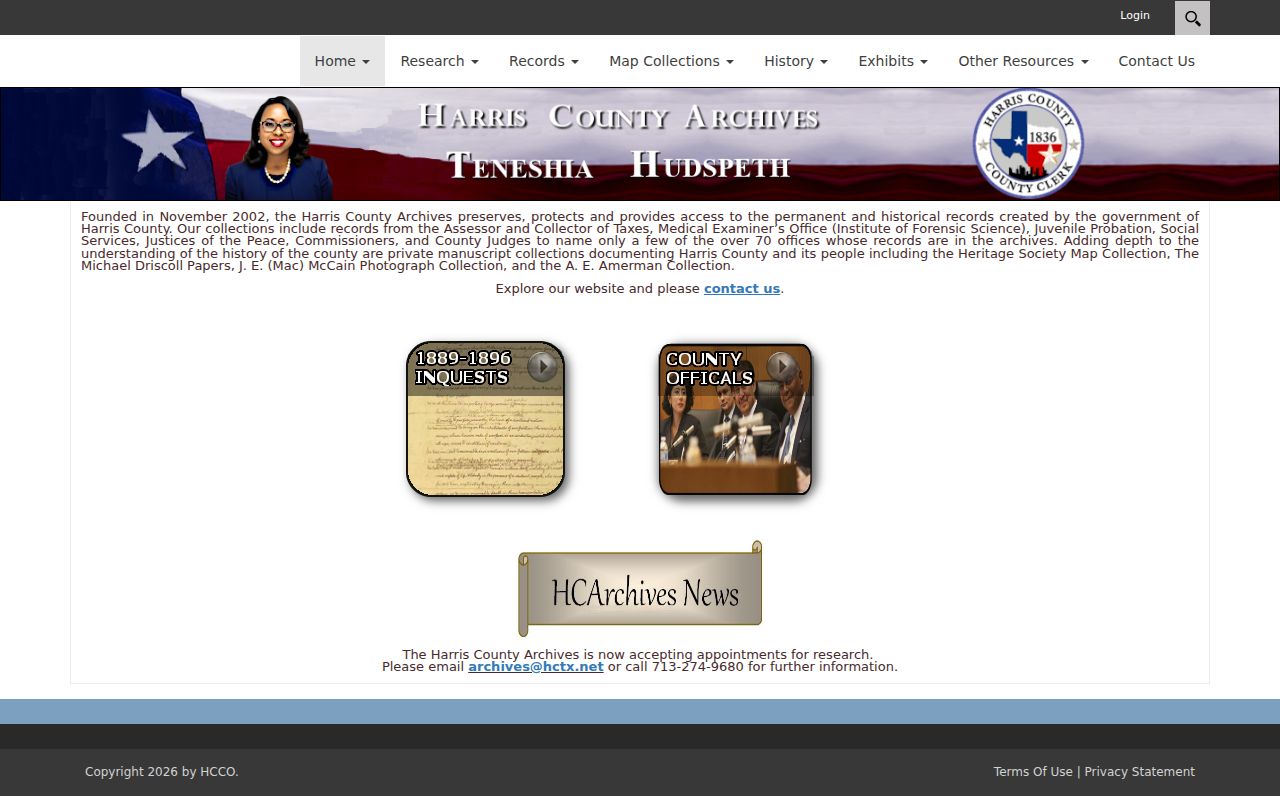
For county-held material, the Harris County Archives has records from more than 70 offices and private manuscript groups, as well as microfilm and Houston Chronicle and Post material. An appointment or a focused request for a surname, date range, volume, or reel is more useful than a broad request for every record about a family.
The Harris County Archives collection is shown on its official research page.
Archive material can fill a Houston city directory gap, but it remains a separate record series. Retain the collection and box or reel reference supplied by the archivist.
Reading Houston Directory Entries
A Houston city directory entry can identify a private citizen or business, give an occupation or profession, and place that entry on a street. The commercial pages can supply a business name and address, while government, school, church, bank, corporation, and society lists provide local context. An entry is not a full household record. It may describe a business address, a boarder, a head of household, a person receiving mail, or a property owner.
| Name or business | Private-citizen name, business name, or organization listing. |
|---|---|
| Occupation | A stated occupation or profession when the volume includes one. |
| Place reference | Street address, other location, or business address as printed. |
| Street guide | Address-first or householder material that can lead back to a name entry. |
| Citation details | Volume year, publisher or compiler, page number, and collection source. |
- Criss-cross directory
- An address-first directory that reverses the normal name-first path, allowing a reader to start with a street address and find an occupant or owner entry.
- Householder section
- A street or address guide that groups entries by location rather than alphabetical surname order.
- Abbreviation key
- The volume's own explanation of shortened terms and marks. Check it before expanding an abbreviation in notes.
Spouse-in-parentheses, widow notation, boarding marks, and owner or renter symbols are possible in historical directories. Treat them as volume-specific, not universal. The key and the inspected page must support any interpretation. The 1866 collection description confirms the kinds of entries indexed, but stable OCR for a named resident was not exposed in the official page inspection. A reader who needs a quotation should transcribe directly from the image and preserve the page number.
Houston Directories by Address
The address-first route changes over time. Early Houston street and avenue guides can sit beside alphabetical pages, while preservation sources describe criss-cross directories from 1925 forward. That makes the Houston city directory collection valuable for a former address without claiming that every listed person lived there permanently. For the current parcel and deed route, use the Houston street directory rather than treating an old book as modern ownership proof.
Street labels can upset a simple search. Dowling Street was renamed Emancipation Avenue in 2017, and Houston's annexation history reaches back to 1836. Try the current and historic street names, then the subdivision, lot and block, or legal description when the address sequence stops. Postal city, city-limit, and parcel labels can also differ.
Note: A city-directory street listing supports a dated lead, not a conclusion about a person's present address or identity.
Trace Houston Directory Households
To trace a family, choose a Houston city directory close to the event, record the name and place reference exactly as printed, and then move backward or forward in annual or five-year steps. Pairing a directory with the nearest census year helps separate a one-year address from household composition. The most recent publicly released federal census is 1950 under the 72-year release rule.
- Choose the directory year nearest the known event and search the surname, street, or organization.
- Save the volume, page, occupation, address, spelling, and any mark that the volume key explains.
- Check the street guide or criss-cross section when an address is known, then compare the alphabetical listing.
- Move through nearby years and pair each period with the nearest available federal census schedule.
- Confirm a move, death, marriage, or ownership change with a deed, probate file, newspaper, funeral record, or vital-record custodian.
A disappearance can reflect a move, death, altered spelling, omission, or a change in how the directory listed people. Use a newspaper or funeral record for a death lead, a deed for a property change, and a census for household composition. Each answer comes from a different record, so cite each one separately.
Houston Directory Record Gaps
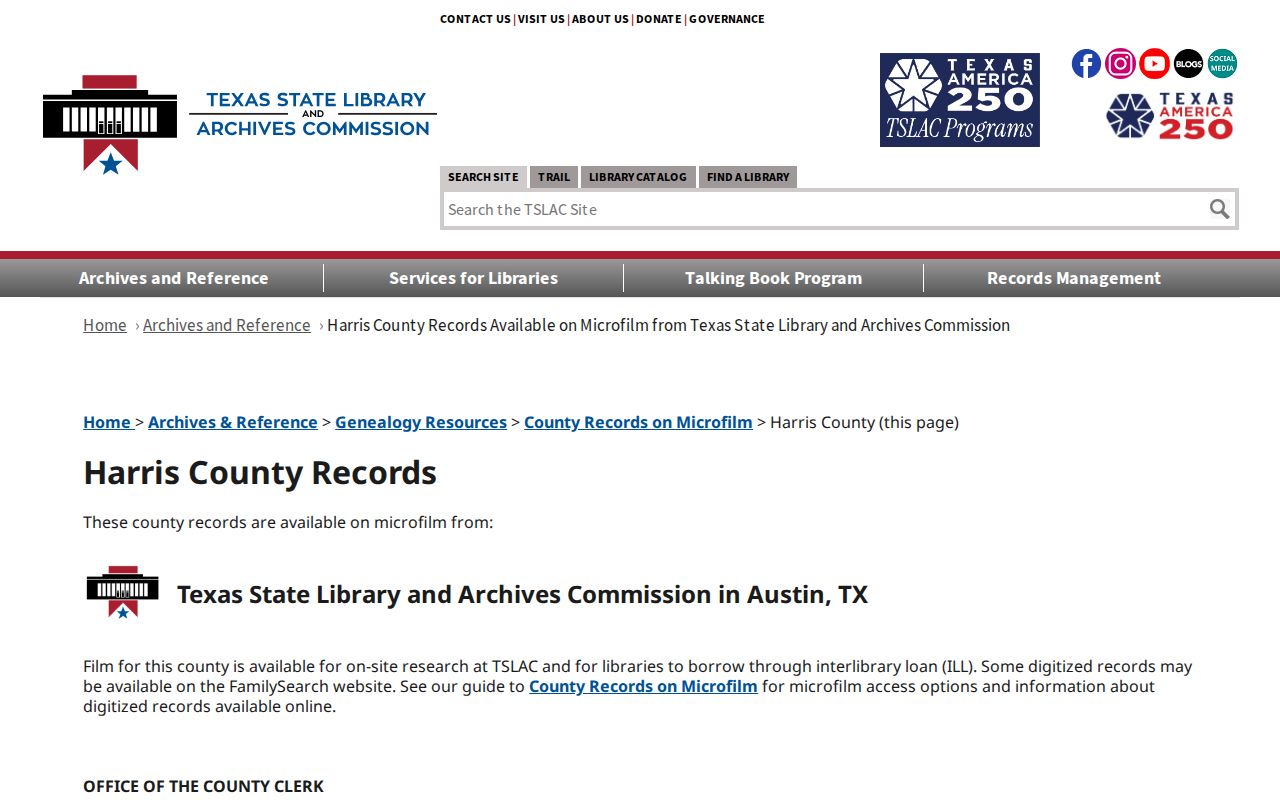
When digitized volumes stop, the Texas State Library and Archives Commission Harris County microfilm guide provides a second path to historic county records. It lists deed records from 1837-1886, direct and reverse index reels, court and probate material, and interlibrary-loan options. The guide documents gaps too, including missing pages 1-78 in probate volume A and split or missing court reels.
The TSLAC guide is visible through its Harris County microfilm holdings.
A documented gap is not proof that a family left no trace. Record the missing volume or reel, then test a deed book, archive collection, newspaper, or another directory holder.
Houston Directory Companions
Clayton's Fogle-West Funeral Home material spans roughly 1921-1975, with digitized images for approximately 1950-1965. Boulevard Funeral Home material covers roughly 1961-1967. HPL also identifies Houston death certificates for 1874-1900, the Houston Chronicle historical archive from 1901 through October 2017, the Houston Post from 1880-1995, and yearbooks, photographs, maps, and oral histories at the Houston History Research Center.
Sanborn maps add a place layer. HPL lists Houston sets for 1885, 1890, 1896, 1907, 1924, and 1955; UT and the Library of Congress hold overlapping complete and partial runs. A map can show a structure footprint or nearby use, while the directory supplies a name or address. Neither is a deed or a certified vital record.
These companion collections are especially useful when a person appears only once in a city directory. A funeral record or newspaper can suggest a date to test; a map can show whether the address existed in that form; and a deed can place the property in a legal description. Keep each source separate in notes. Houston's historic record trail survives in several systems with different coverage and different limits, rather than in one complete register.